


From Beats to Equations: How Math I Tutors in Wilmington Inspire Young Musicians
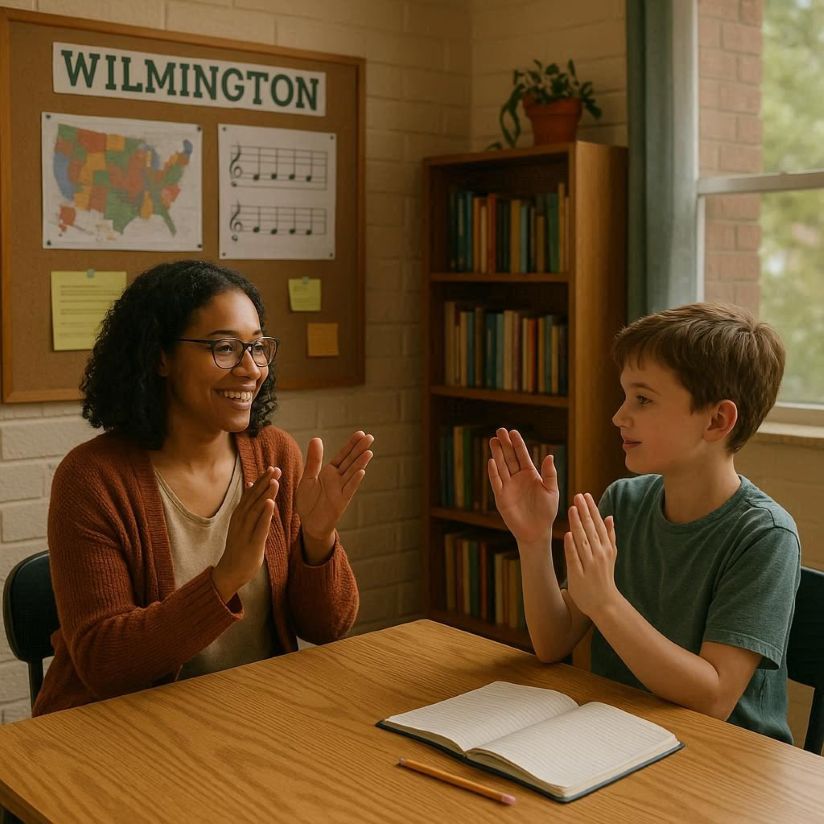
The Hidden Rhythm of Math and Music
Music and math share a hidden rhythm. In Wilmington, young musicians are discovering that the notes they play and the equations they solve are more connected than they ever imagined. Through the guidance of dedicated Math I tutors, students are unlocking the numerical secrets behind rhythms, harmonies, and compositions, blending creativity with logic in exciting ways.
Unlocking Music Through Numbers
The connection between math and music is profound. For many students, understanding this link starts with a skilled math I tutor Wilmington who shows how numbers shape the art of sound. Fractions govern time signatures, ratios define harmonious chords, and patterns form the backbone of musical structure. Tutors in Wilmington are helping young musicians see that mastering math isn’t just about passing tests, it’s about enhancing their creative expression.
Mastering Rhythm with Fractions
Rhythm relies on mathematical precision. Consider a simple 4/4 time signature, the heartbeat of most pop songs. Each measure divides into four equal beats, a concept rooted in fractions. Tutors break down these ideas for students, showing how a quarter note is one-fourth of a measure and an eighth note is half that. This clarity helps young drummers and pianists count rhythms accurately, turning chaotic beats into polished performances. As tutor Sarah Jenkins says, “When students see that math organizes their music, it’s like a lightbulb goes on.”
Harmonies Built on Ratios
Harmonies are built on ratios. Why do some chords sound so pleasing? It’s all about mathematical ratios. The interval between two notes, like a C and a G, follows a frequency ratio of 3:2, creating a perfect fifth. Wilmington tutors use these concepts to spark curiosity in students who love music but struggle with numbers. By connecting ratios to the chords they strum on their guitars, students find math less intimidating and more inspiring.
Patterns in Composition
Compositions thrive on patterns. Music is full of repeating sequences and structures, much like mathematical patterns. Tutors guide students to recognize these patterns, whether it’s the symmetry in a Bach fugue or the repetitive loops in electronic music. This approach not only sharpens their math skills but also deepens their understanding of composition. For instance, understanding sequences helps a student write a catchy melody that feels both familiar and fresh.
Personalized Learning for Musicians
Tutors in Wilmington make learning personal. They tailor their lessons to each student’s musical interests, whether it’s hip-hop, classical, or jazz. Here’s how they do it:
- Customized lessons: Tutors use students’ favorite songs to teach fractions and ratios.
- Hands-on activities: Students clap rhythms or tap piano keys to feel mathematical concepts.
- Real-world applications: Tutors show how math powers music production software.
By blending math with music, tutors make abstract concepts tangible, helping students excel in both fields.
Building Confidence Through Music
Confidence grows through this unique approach. Take Mia, a 14-year-old violinist who struggled with algebra. Her Wilmington tutor used scales and tempos to explain variables and equations. “I used to hate math,” Mia says, “but now I see it in every song I play.” Stories like hers are common, as tutors help students overcome fear of numbers by tying them to their passion for music.
Technology Enhances Learning
Technology amplifies the connection. Many tutors incorporate music production software to teach math. Programs like Ableton Live rely on precise timing and sequencing, which are grounded in mathematical principles. Students learn to adjust tempos using numerical inputs or create beats by manipulating fractions of a measure. This hands-on approach makes math feel alive, not just a set of problems on a page.
READ ALSO: Expressions of Faith Through Music: Modern Examples and Inspirations
Community Workshops Spark Creativity
Community events spark inspiration. Wilmington’s tutors often collaborate with local music programs to host workshops. These events let students explore math through songwriting or rhythm exercises. At a recent workshop, students used geometric patterns to design their own beats, blending creativity with logic. “It’s amazing to see kids light up when they realize math is part of their music,” says tutor James Carter.
Transforming Lives Beyond the Classroom
The impact goes beyond the classroom. Students who work with Math I tutors often improve their grades and gain confidence in their musical abilities. They start to see math as a tool for creativity, not a barrier. Parents notice the change too. “My son used to dread math,” says parent Laura Hayes. “Now he’s composing his own songs and acing his tests.”
A Lifelong Partnership
Music and math are lifelong partners. In Wilmington, tutors are showing young musicians that numbers are the foundation of their art. By mastering math, students unlock new levels of creativity, from writing complex compositions to producing tracks. The journey from beats to equations is transforming how these young artists see the world, proving that math and music together create harmony that resonates far beyond the classroom.

 Sound quality is crucial for any music studio. Whether it’s a recording studio or a rehearsal space, acoustics play a key role in ensuring clarity and balance in sound. The materials used in constructing these spaces can significantly affect how sound behaves within them. One such material is metal roofing, which is becoming increasingly popular due to its durability and sleek design. However, the influence of metal roofing on sound insulation and acoustics in music studios is not always fully understood.


 When we think about music and sustainability, the first thing that may come to mind is environmentally-themed songs or concerts with a message of eco-friendliness. However, you might not have considered second-hand solar panels (source: tweedehands zonnepanelen) which have a surprising link between music and sustainability.


 Rap music is commonly perceived as being a genre that represents violence, drugs, and other negative aspects of life. It’s often seen by society as having a negative impact on younger generations.


 Music festivals in Australia are more than just the music. From the dusty fields of Splendour in the Grass to the beachy vibes of St. Jerome’s Laneway, food and snacks have become a core part of the experience. While the main stage might get all the attention, what fans eat between sets is what keeps them dancing. From classic Aussie bites like meat pies and hot chips to homegrown favorites such as Tim Tams, Shapes, and Milo, many of which you can find at the Australian Food Shop, festival snacks now reflect the desire of music lovers for convenience, taste, and something a little fun.
 Soft melodies drift through the air, blending with the gentle scent of lavender oil. The massage table feels like a sanctuary, and the music guides you into a deeper state of calm. This isn’t just background noise—it’s a vital part of the massage experience. Music, when chosen carefully, transforms a session into a journey of emotional release, physical relaxation, and sensory harmony.
 Outdoor music festivals thrive on energy, but the hum of a loud generator can kill the vibe. Musicians and event planners face a challenge: powering concerts without drowning out the music or annoying the crowd. Quiet inverter generators solve this problem. These compact, efficient machines deliver reliable power while keeping noise to a minimum. They let the music shine and the audience enjoy the experience without distraction.
 Long known for its calming effects, music also finds application in horse travel. Inside a horse float, playing soothing music can help lower the stress and anxiety horses might feel on the route, enhancing the journey.
 Traditional Chinese music is steeped in history and symbolism. From the guzheng’s soothing melodies to the pipa’s rhythmic beats, each performance narrates stories of ancient times, love, and nature. The choice of dress plays a crucial role in enhancing this storytelling. For example, a performer in a delicately embroidered qipao becomes a visual extension of the music. The flowing silk fabric, adorned with patterns of nature like cherry blossoms or cranes, mirrors the themes often explored in the songs.
 Music festivals are some of the most exciting and vibrant events in the world, drawing thousands of people together to enjoy great music, food, and a sense of community. But with all that fun comes a lot of waste. From discarded food wrappers to broken tents, bottles, and thousands of empty cups, festivals can generate an overwhelming amount of rubbish.
  Understanding how we perceive music and sound is deeply rooted in the intricate processes of our auditory system. Proteins play a key role in transmitting sound signals from the ear to the brain, and advances in proteomics are uncovering new insights into this complex system. Cutting-edge technologies like Tandem Mass Tags (TMT) and iTRAQ enable researchers to study the proteins involved in hearing more closely than ever. These findings could lead to revolutionary hearing loss treatments and deepen our understanding of music perception.
 The WhatsApp API provides a more direct and intimate way of contact at a time when social media channels sometimes separate artists from their followers. These days, musicians can instantly send personal messages, highlights of forthcoming songs, and special updates straight to their followers’ WhatsApp accounts.
 Anyway, students who receive regular tutoring in math from Ashley Morris Math Tutors eventually overcome the chinks in their mathematical foundations. The one-on-one online mentoring engagements aim to determine the knowledge gaps that prevent them from progressing to the more complex math subjects like algebra, calculus, geometry and trigonometry.
 Generally public schools and colleges are not sensitive enough in recognizing the barriers that create knowledge gaps in their students’ math education. Most parents, on the other hand, simply accept the fact that math is a difficult subject that they themselves had to prepare for later, just so they can pass their college SAT and ACT entrance tests.
 Music and social gatherings have always been intertwined, with tunes setting the mood and making events memorable. Recently, the use of nangs (cream chargers) has become a common feature in various social settings, especially where music plays a central role. With the convenience of nang delivery services, these items have become even more accessible, contributing to their normalization at these events. But how did nangs become so normalized at these events, and what role does music play in this trend? Let’s dive into this phenomenon and see how music and nangs interact in modern social gatherings.


 Music has the incredible power to transport us to different worlds, evoke all kinds of emotions, and leave a lasting impact in our lives. Whether it’s a catchy pop tune, a soulful ballad, or a powerful symphony, there’s no denying the magic that music holds. But what if there was a way to enhance that magic even further? Enter Music Glass, a revolutionary product that is set to transform your listening experience like never before.
 Initially, music glass was a popular form of entertainment in aristocratic circles, often performed in salons and grand parties. Its delicate and ethereal sound captivated audiences, as musicians skillfully manipulated the glasses to create beautiful melodies. Over time, the instrument gained wider recognition and
